Showing posts with label mobile payments. Show all posts

Friday, November 2, 2012

Money2020 Expo - Key Conversations and Companies & Services to Watch


By Randy Smith,
November 2, 2012


Is Bluebird the way to fly in prepaid? This monthly fee free model will do well.


The focus of the event was clear. Mobile and Digital Wallets are the future. Many great insights were shared by top executives, providing a preview of their direction and focus.


You would never have guessed this was the premier event for Money2020 Expo. The abundance, quality and diversity of keynote speakers, presenters, panels, moderators, exhibitors and attendees would, if you were an industry outsider, make you think the event had been held for years. It was impossible to capture it all and attend all panels and meetings! I'll start with companies I interviewed.


American Express

Joanna Lambert of American Express shared with me a bit of the company's vision and focus of the future:


"We want our Serve app to be used several times a day. This requires an intuitive interface focused on saving time and money. Maybe it's saving a trip to the bank or receiving a notification from your local bakery when the when rolls are hot and fresh? . . . We want to help merchants to drive incremental value and increase consumer loyalty . . . We are very open to partnering to reach our goal of being agnostic . . . With Bluebird our aim is to make loading money and transacting as fast and simple as possible . . . We are spending a lot of time asking what consumers want. We are transitioning from payments company to a service company."


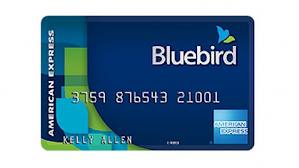


I've always seen Amex as delivering extra value via services like OPEN and their concierge services. If they can continue to provide that extra value and merge it with Serve, I believe this is a winning formula. By the way, we all can take part of Amex's upcoming nationwide event, Small Business Saturday. This event on November 24th has the right focus, social strategy and charm to make for a big hit in supporting your local small business. Check it out and spread the word!


First Data
I sat down with Dominic Morea and Mark Herrington of First Data to hear first hand about their new merchant and consumer engagement platform Universal Commerce.

Dominic and Mark shared: "Universal Commerce is a framing strategy. We've realigned product around this concept. We reach over half of the terminals in the U.S. and paired with our Open API - Rapid Connect. New value-added services and offers tied to transactions can be delivered seamlessly. We have the ability to recognize a consumer and link relevant offers.  We can help publishers with precise results."

I've looked far and wide and First Data does have a solid vision about a the future of connected or Universal Commerce. It's worth taking a look at their 3-minute video below about Universal Commerce.


First Data's Vision of Universal Commerce


Read the entire article!

Friday, October 26, 2012

The Future of Money - See with 2020 Vision!


By Randy Smith,
October 26, 2012


If innovation is the future, understanding innovation is what matters most.


Today, rather than just telling you what I think may be the future of money, I want to start by first taking a look at innovation itself. Plato can be attributed with originating the concept that "Necessity is the Mother of Invention." Innovators like Steve Jobs and Bill Gates helped to shape the future of much of the technology we use today. If we can better understand how they knew what products and services were necessary or in demand, then perhaps we too can forge a clear path forward into the future of commerce. In looking back, we can peer forward and know that history often repeats itself.


So we will begin by observing what they saw and how they came to the conclusions they did. What Bill and Steve had was a knowledge base solid enough to understand the core problems.

This article is published just as when Microsoft has launched a bold new Windows 8. It will make them or break them, but it is innovative. Circling back to 1975, Bill Gates, the co-founder and chairman of Microsoft, and other programmers were writing BASIC (a programming language) and computers were in their infancy. That same year Bill partnered with Paul Allen to form Microsoft. Bill developed the insight and smarts to understand the current barrier to the evolution of software and computers was an operating platform upon which other programs could run. Bill knew what was needed by IBM and all he needed to do was find or develop the software that could serve as this platform or OS. So what Bill had done to be in position to solve the problem was to understand what the main problem was, and how to fix it. He could not have done this if he did not understand the entire ecosystem and he was not networked enough to set meetings. As the story goes, Bill secured a contract with IBM to build their software platform and purchased an OS from Tim Paterson of Seattle Computer Company for $50,000. This operating software came to be known as DOS.

Continue to read the rest of the article.

Friday, August 31, 2012

Daily Deals Manifest Destiny - Can One Live On Deals Alone?


By Randy Smith, Mobile Wallet Media
Thursday, August 30th, 2012


Daily Deals are indeed not dead, but must evolve and transform if they are to survive the mass adoption of the Mobile Wallet. Daily Deals as we know them will continue to exist, but they will need to reduce fees and discounts drastically to reach their 'Manifest Destiny.'


So just a couple weeks back I wrote about how Daily Deals are perhaps too dysfunctional to survive. I wrote the article in response to the slew of bad earnings and news reports about Daily Deals companies. This is the first article in our 'SuperCommerce Series.' Tighten your belt it's going to be a wild ride!

Daily Deal companies will need to change their revenue, distribution and redemption model to survive the coming 'Mobile Wallet Revolution.' In my previous article on Daily Deals, I spoke much about Daily Deals limiting their market with high fees and discounts. I'll add a bit to that here and now.

If Daily Deal merchant fees are reduced drastically and allow merchants to set lessor discounts or rewards, more like LevelUp, they will have a chance to provide deal vouchers for just about anything. That's right, I said anything! So yes, it will be possible for "One to Live On Daily Deals Alone!"

Well, perhaps not anything, as we know money can't buy many things.

I see this as a new "Mega Trend," one that will completely transform not just mobile commerce, but all retail commerce! This trend itself could be every bit as disruptive as mobile, the web and the mobile wallet itself. The implications of this transformation will alter all retail marketing and advertising! If you think hard about this, you will realize the spending and purchase decisions of consumers will be altered once Daily Deals are in the Mobile Wallet. With the consumer armed to carry as many deals as they want, this will prompt the consumer to buy more deals as they are easier to manage than the current, 'Clunky.' and non-seamless, redemption methods. Therefore, if the purchase cycle is moved forward to "Lock-in customers and future sales," then marketing and advertising will need to redraw their lines around this.

So is what I'm saying here that Daily Deals will become like a new virtual currency? Yes! If this new breed of Daily Deals is convenient enough and enough brand name retailers adopt this model, consumers should scoop them up like crazy. So rather than a high-discount and costly coupon or voucher to drive consumers to the store, a deal with a lessor discount, say a $110 voucher for $100 in cash. LevelUP has already shown us a glimpse of this type of offer. Convenience is traded for larger discount. Consumers will take a "Good Deal," and so may merchants, if it is easy to obtain and redeem. This model I believe will be a powerful force to direct, not just traffic, but lock in loyal customers and sales in advance. If one goes down the rabbit hole deeper, if a consumer has spent their funds on "Mobilized Daily Deals," then the decision to where they shop is done.

These types of deals have long been available during the holiday season via bonus gift card offers and consumers may purchase gift cards online at a discounted rate. But the inconvenience of carrying multiple cards has made it impractical at scale. With the Mobile Wallet, such barriers are removed.

OK, now onto distribution. If you are a Daily Deal company, you are ripe for disruption if you are not plugged into and integrated with the major Mobile Wallets. Why? Because the convenience associated with receiving and redeeming offers via the Mobile Wallet will demand it.

Imagine if redeeming a Daily Deal was just like making a purchase using the Starbucks Card Mobile or LevelUp app. This is the future of Daily Deals and really offers period. Mobile Wallets will make getting great deals easy, simple, convenient and fast! Deal companies, merchants and marketers should get on board this "train of thought" or be left behind with a worthless ticket to nowhere.


So with, Google, PayPal, ISIS, MCX, Square, LevelUp and more Mobile Wallets launching this Fall or 2013, don't you think they might be interested in offering a high-margin, Daily Deal service of their own? Well, one may say it may be easier to just partner with Groupon or Living Social or another of the myriad of the high-volume, Daily Deal companies. On the other hand, with the stock hit Groupon has taken as of late, perhaps they are ripe targets for acquisition by Mobile Wallet companies. Via acquisition they may lock in merchant relationships, a sales force, a platform and revenues, all in one fell swoop. Or perhaps Daily Deal platform infrastructure companies will be ripe acquisition targets? Mobile Wallet companies are all armed with a massive customer base and billions of bucks. Buying infrastructure alone could make for an exellent investment. Of course some of these companies may already own a Daily Deal platform.

Amazon, which has a large investment in Living Social, may stand the best chance to stand firm and negotiate deals with all major wallet players. Amazon, has yet to make a move or tip it's hat with regards to it's plans for a Mobile Wallet, even though they are very adept at processing payments.

Apple, with it's much anticipated launch of it's iphone 5, with or without NFC and possible announcement that Passbook will become a complete mobile wallet, is news we are all eagerly waiting to hear.

First Data launched a new service named "OfferWise" at SXSW this past Spring. To quote First Data from their YouTube page "First Data's OfferWise solution is a revolutionary product that allows consumers to electronically link offers and deals to any payment card or mobile wallet." The release by First Data in June,  is titled "First Data OfferWise Solution Enables Universal Commerce for Offer Publishers and Merchants." First Data, if you are not aware, processes an estimated 60-65% of all retail transactions. If OfferWise can be a "platform in the cloud that seamlessly ties offers to Mobile Wallet," they could prove to be a platform of choice for Mobile Wallets and one not to ignore. 


Daily Deals in the Mobile Wallet, for clarity's sake, will not actually be a "gift or prepaid card," but will be a voucher, that may be redeemed via one's Mobile wallet, at a specific set of retailers, for a limited time. The other side of the equation to enable Daily Deal to be processed has to do with the integration to Point of Sale (POS), which I've touched upon in recent articles, and hence will not belabor again now.

How Mobile Wallets, Daily Deals, POS vendors and processors all decide to work together to build the future of Daily Deals and mobile commerce will be interesting to watch, but rest assured and God-willing, I will be here to comment upon it or be part of building it.

To wrap it up, and set up my 'Shameless Plug of the Day,' as a brand new journalist and as a FIRST-TIME EXPECTING DAD, I'll leave some meat on the bone for a later discussions and paid consulting. Just remember to tell others you heard it here first, refer others to read my articles and hire me to consult. I'm also open to offers I cannot refuse.


Mobile Wallet Media is a news media, analyst, marketing and consulting firm focused on the future of mobile: payments, commerce, daily deals, security, loyalty, marketing, prepaid cards, virtual currency and the convergence of them all with social and local. Randy Smith, the Founder and Chief Editor of Mobile Wallet Media, was also the primary founder, inventor and former CEO of MobilePayUSA, a TechCrunch Disrupt Startup Alley Winner in 2010.

Monday, August 27, 2012

The Mobile Wallet Olympics Have Begun!


By Randy Smith, Mobile Wallet Media
Monday, August 27th, 2012


This is week 5 of a 7-Week Series: The 7 S's Required for Success in Mobile Payments

Let The Games Begin!


Time is money in business and retail and possibly even more so with Mobile Wallets. The wallets that will make the biggest impact will be the one's with the most transaction SPEED at Point of Sale and most easily and seamlessly integrated with POS.

During and since the London Olympics, a fast and furious slate of news about Mobile Wallets strolled across our screens seemingly every other day. With all the pomp and positioning on par with the actual Olympics, I believe the 'Opening Ceremony for the Mobile Wallet Olympics' has officially taken place.  But rather than just two weeks of competition, the 'Mobile Wallet Olympics' will play out over the next 2-4 years.

The race for victory in mobile payments is much like the actual Olympics. In the actual Olympics there are a multitude of athletes, events and countries with clear-cut favorites and the underdogs, of which we love to see both win medals. With the Mobile Wallet Olympics, rather than people and countries competing for medals, there are products and companies competing for market share vs. medals. The top 3 companies that end up on the medal stand will garner most of the money and market share, but like those that make it to the finals in the actual Olympics, there will be victory and rewards to share in as well. And of course there will be many companies partnered to support and give their marque product, their Mobile Wallet, the best chance for success.

In replacing our good old friend the 'Mag-Stripe Card,' mobile payments cannot be slower. At POS the NFC Tap and the 2D bar code scan appear to be the clear front runners. Either of these mobile payment methods seem to be just as fast as cards or cash.

For Mobile Wallets to succeed they need SPEED of adoption and integration. The more simple, more options and more reasons merchants have to adopt technology, the more likely they will do so. Be it Usain Bolt or Michael Phelps in recent Olympics or Dale Earnhardt Jr. of Nascar on the race track, less drag and better mechanics are two key differentiators that set them apart from the rest. Of course a high level of talent must serve as the foundation for success to redeem these benefits. A merchant without a 2D bar code reader rigged for coupons or payments will soon be requirements to compete in market that is getting ever faster and efficient.


For readers not akin to sports analogies, please forgive me as I am a avid sports fan and ex-athlete (football, basketball, volleyball, hockey and baseball). Hopefully it still helps with perspective and vision.

For a POS mobile payment method to become a standard, the easier and more quickly it is for merchants to integrate, may make all the difference. Right now is seems that 'NFC is the turtle and the 2D bar code is the hare' in the race for standardization, but this race will tighten as more reasons are added for merchants to adopt new NFC or 2D bar code equipped terminals.

I found a good summary article, describing 'Future-Proofing' payment terminals. This article by MerchantAccountGuide.com, quotes Mike Duffy, president of Chase Paymentech: "As emerging payment options gain adoption in the U.S., merchants are looking to make the customer check-out process as easy and safe as possible. The Future Proof terminal is a one-stop solution for merchants to keep accepting today's forms of payment and prepare for new consumer payment preferences on the horizon."

While Chase and Verifone lead the market in showcasing of 'Future-Proofed' terminals, Merchant Account Guide describes Merchant Wherehouse's terminals as follows:

"The company introduced its "agnostic" Genius platform, which can be integrated into any POS system, regardless of device or operating system. Like Verifone and Chase, Merchant Warehouse has also been throwing around the "future proof" label. And it claims that Genius can "integrate every conceivable transaction technology, payment and type and customer engagement program" -- including  NFC, EMV, QR codes and mobile payments, as well as loyalty, gift and reward programs."

In my opinion the 'Four Horseman' of the Future-Proofed terminal must include the following types of readers: 1) EMV, 2) NFC, 3) 2D bar code and 4) mag-stripe. Of course 2D bar code readers are an investment ($150 - $300 each) some retail merchants have already made. It's my strong bet that many more of the Mobile Wallet apps will use, like Starbucks and LevelUp, the display of a 2D barcode to enable mobile payments. If the payment terminal has a 2D scanner, it will be able to capture the card credentials, actual or tokenized, and process the transaction with any POS system, without integration.

A 5th horse in the race for alternative payments may very well be Pay-Pal's 'In-Store Checkout's Mobile Number + PIN' solution. I know I said in my last article this solution, "as is," is not secure enough to scale without massive potential for fraud, but I think they will soon rectify this problem. When they do, this will be a very convenient and secure product.

Most POS software allows for configuration of their software to scan 2D bar codes for the purpose of payment. This is already being done with gift cards. However, is there enough value for the merchant to buy and configure their software to do as such if they have not already done so? Well, with Square and LevelUp already processing their mobile transactions as such, I think there might be. An additional question that must also be asked is:"Will there be added difficulties to connect closed loop with open loop or the proprietary Mobile Wallet platform? I believe that the 2D bar code will become a standard for processing mobile payments and that all Mobile Wallets must have a 2D bar code display option to process payments.

Future of Mobile POS
I believe 2013 is going to be a huge year of adoption of mobile POS solutions. This is due to the perfect storm of mass adoption of smartphones, payment apps and ipad mobile POS solutions that increase speed, convenience of checkout for merchants and consumers alike. Plus mobile POS checkout can also enhance margins for merchants and discounts for consumers. All the momentum in the media with major retailers like JCPenny and Starbucks making moves to fully embrace mobile POS and payments, will readily move the adoption meter to include Tier 2 and 3 stores. Don't be surprised if you see signs at the mall this Fall featuring mobile payments during our first 'Mobile Christmas.' It is prime time to be in the retail POS industry!

Merchant service providers or resellers need to provide case studies or paint the picture how employee costs may be cut by improved SPEED of order processing and checkout combined with the opportunity to "up-sell customers." I see mobile POS being used to accomplish both by extending the reach and capacity for order-taking and checkout.

In restaurants, mobile POS enables a server to add an order in seconds without duplication, delay or increased chance of errors. The time freed up for servers will enable ample time for up-selling and providing better service, thus consumers will be more satisfied and more likely to return sooner and more often. At a busy night at the bar, a "line-busting" mobile order capability could increase orders by 15-30% or more. Bottom line is adding Mobile POS technology can cut employee costs and enhance service and sales.

Merchants can effectively market these solutions by tying to loyalty and 'Offers tied to enrollment.' Smartphones and tablets are everywhere now and "Cool, Convenient and Savings" is the way to sell. The new mobile channel will move to eventually tie all campaigns under one coherent marketing umbrella. Loyalty programs tied to paper or plastic have long restricted the adoption rates of consumers. Who wants to carry around a card for every store they frequent? Merchants may empower their customers to "Go Mobile and Earn Special Rewards." Once customers are on a Mobile POS or Mobile Wallet platforms, merchants are enabled to extend personalized offers based upon past order history or proximity offers using GPS and coherently tie to all other marketing channels.


About Mobile Wallet Media
Mobile Wallet Media is a news media, analyst, marketing and consulting firm focused on the future of mobile: payments, marketing, loyalty commerce, security, prepaid, virtual currency, daily deals and the convergence of them all with social and local. The Chief Editor, Randy Smith, was the primary founder, inventor and former CEO of MobilePayUSA, a TechCrunch Disrupt Award Winner.


Friday, August 24, 2012

A Square Peg in a Round Hole! Is Pay With Square Scalable?


By Randy Smith,
Mobile Wallet Media
Friday, August 24th, 2012


I love the Starbucks Card Mobile App. It is fast, simple, convenient, fun and rewarding. However, 'Pay with Square' may have a tough time scaling as fast as other Mobile Wallets, like Google, MCX and ISIS, if they fail to simplify integration at POS.


The Pay with Square Video showcases a long overdue and brilliant customer service feature, making it much easier for hospitality employees to provide 5-Star service. I spent several years in the 80's and 90's working in guest services for luxury hotels and in the restaurant industry. Therefore, I understand very much about high-end customer service in the hospitality industry. Pay with Square is great, but it may prove difficult to get their software installed quickly unto POS systems.

Pay With Square will require custom software to be loaded onto 'Locked-Down POS Terminals' and PC's or tablets, which may or may not be unlocked. Locked means the system is 'locked-down' and access to load new software is often controlled by POS Dealers, POS Network Security Firms or POS Providers themselves. Unlocked systems are open and able to download new software without working with the dealer or POS provider. Either way, the fixed systems do not like new software on their platform, much like our bodies do not like viruses or cancer.

Systems are locked down to prevent hackers or viruses from infiltrating the POS software, stealing data and corrupting the system. A 'Secure Network' is set up by merchants to protect the communications between mobile POS and fixed POS systems, as well as the back office, central network or payment processor.

Most 'Fully Integrated Systems' are locked down and many ‘Stand Alone’ PC's are also locked down. POS tablets are less likely to be locked down, unless they are issued by a POS Dealer or POS security firm to better secure the devices.


So Starbucks, Square and all merchants running their stores on Locked-Down, Fully Integrated Systems, will have potentially huge integration challenges or equipment costs to add Pay with Square. For a merchants to accept Pay with Square the merchant has the choice of using Square Register via an ipad or integrate with the merchant's current POS system.

If a merchant wants install Pay with Square on their Locked-Down, Fully-Integrated System, they will have to coordinate the unlocking of the system. Now this would get you Pay with Square, but this would be a stand alone system. Yes, this can be done, but this does not make sense as the customer or the cashier would have need to manually enter the amount due. This leaves too room for mistakes by cashier or customer and a process of closing out the transactions with their current POS system would need to be established as well. This makes no sense to do this unless they were just showcasing a proof of concept. Since Square needs a highly scalable system, this is not the solution.

However, it might make more sense if Square separates out the 'ID recogniztion' from the actual payment authorization. Or if they could authorize transactions separately from the existing POS and then merge the transaction data back in real-time ito balance and reconcile the cash register ledger.

The most likely solution for Square is to integrate fully with POS systems, like TabbedOut, Paydiant or MocaPay have already done. They would start with the system(s) Starbucks is using and try and integrate with the top 10 systems by early next year. This too, is not a straight forward process, as connecting to each POS system is a very different process.  There is another, more scalable way to do this, but I'm not at liberty to discuss publicly, as it could potentially reveal MobilePayUSA trade secrets.

Other than integrating to dozens of POS Systems, I don't see how Square will scale quickly with installing Pay with Square. This could be a very viable route if they have enough people assigned to integration. Within 3-months they could accomplish integrations, then run 3-months private pilots and be ready by Q2 of 2013 for launch of Public Beta. Many merchants have older POS systems, which they very likely would be required to replace or upgrade if they wanted to accept Pay With Square or several other mobile payments solutions. Maybe I'm wrong about all of this and Square has some unique integration method up their sleeve? But it does appear Square will still have to work within the limits of known integration methodology.

So one may ask, "Will this not lead to merchants switching over to Square Register and tablets?" Yes and no. This is a function of size and complexity of their store ordering system and size of their chain.

The larger the retail chain, the less likely they will want to swap out their current system to Square Register. It will be really hard to convince major retailers to change out their entire systems just to accept Pay with Square! We've already seen that most major merchants dragged their feet to pay for terminals with NFC. POS registers cost up to $3500 each, the POS software they run is most likely already works great and is secure.

Retailers would only want to adopt Square if they had simple ordering needs at POS, like a coffee or sandwich shop, and they were unhappy enough with their current system. It makes complete sense for new merchants with simple software needs, as the cost to get up and running with ipads and Square Register is as much as $3,000 less per register. By the way I do think Square Register has a huge potential merchant base, merchant's with fairly simple software needs, but it will have a tough time convincing 'Top Tier Retailers' to rely on Square as the platform to run their stores.

Unless a merchant is committed to being an innovator, like Starbucks, Square will truly a 'Square Peg in a Round Hole' and is not likely as scalable as NFC or QR code generation and scan like Starbucks Card Mobile. If Square sticks to Starbucks Card Mobile model and ditches or keeps their very cool, customer service tool separate from payment, they may scale at a pace equal to many current competitors.


About Mobile Wallet Media
Mobile Wallet Media is a news media, analyst, marketing and consulting firm focused on the future of mobile: payments, marketing, loyalty commerce, security, prepaid, virtual currency, daily deals and the convergence of them all with social and local. The Chief Editor, Randy Smith, was the primary founder, inventor and former CEO of MobilePayUSA, a TechCrunch Disrupt Award Winner.


Monday, August 20, 2012

The 7 S's Required for Success in Mobile Payments - Week 4 - Social


By Randy Smith, Mobile Wallet Media
Monday, August 20th, 2012

Week 4 of 7-Week Series


The media focus seems to have been mostly on enabling technology, security and savings, but retailers need a 'Clear-Cut Vision' on how Mobile Wallets will drive more traffic to their stores.

Social will be a key driver of traffic.

Social networks provide the reach retailers are looking for, and one of them is a Droid (please tell me you got that joke referencing Star Wars - Episode 1 + Google's phone). Yes, I know if I have to explain it, it only makes it worse. Welcome to my world of humor. My friends still love me, despite this.


Social has no borders or boundaries and all channels connect to it and serve it. Social networks provide, other media channels, the ability to interact with their customers. Social also has unparalleled depth of data on it's users. Of course each channel each has it's own unique data analytics.

TV, radio and even websites can gather information about their customers to better know and serve them, but this data is limited. Social data is 'Organic Data.' Facebook 'Likes' pinpoint what each 'Social Surfer' is interested in. Try that with any other marketing channel. You want to communicate and allow for 2-way engagement with your ALL of your customers at once. Just post a poll, pic, video, promotion or contest on your Facebook page. Now, I don't want to leave out 'Social's Super Side-Kick' Twitter. One without the other is definitely less engaging in reaching your total audience. Nor should one ignore any of the other prominent Social Networks such as Youtube, FourSquare, Pinterest and Yelp. 

Other media channels freely and without choice promote social networks. Why? Because in the end the 'Customer is King.' If any advertising channel wants to run on all cylinders, it has no choice but to engage social with all it's heart and might. Marketers must do it with passion and purpose or quickly be exposed or ignored as not being 'with it,' or worse becoming irrelevant.

Last week I shared that a 'Heat Seeking Missile' is required to hit our target. To make this missile fly it requires social and the right kind of social. If you ever have seen the movie October Sky, you would know that launching a rocket requires a perfect mixture of fuel. This fuel must burn smoothly and not be full of 'Hot Air Pockets' or the rocket will explode in flight. So am I saying you must be a rocket scientist to carry out social? Yes, but it will require those proficient at Social Media and communication in order to conduct reliable, safe and successful social engineering.

Placing a 'Social Badge' on ones website or ad does not make one Social. Brands must be social, like nice and extroverted people. Customers may come for your product, but will return if a relationship is built. Social Media is about relationship building and adding value to your great product or service.


In a world where customers have a multitude of choices of where they may buy a product or service, they will not as often be so stingy on price or buying elsewhere if they enjoy their shopping experience. This is a key part of brand building and being profitable and via Social, you have the opportunity to take your brand and the relationship to a deeper level. You may share about what, as a brand, you care about besides your product and services; be it saving the planet, feeding starving children or funding college scholarships. But be careful to be very proactive and collaborative with customers and non-profits to achieve the right results. The last thing you want to do is have a 'Cause Marketing' program lacking in real sincerity and purpose. People will see right through this.


In order to accomplish and carry out a successful Social Media campaign companies must hire social, friendly, fun, funny, rational, realistic, intelligent, talented, mature and very creative people that understand their product and their customer. These representatives must also care about what your customers care about and they must care about the causes you partner with. There is no going backwards here! Just like there is no reverse gear in technology, such is the case with social.

Social is most assuredly moving and trending with mobile technology. Mobile of course is changing everything as well (By the way, very soon we will examine in depth how these trends parallel).  Merchants and advertisers must meet their customers where they are at and this is where social and mobile meet. If a marketing channel fails to do this, it would have been like the auto industry saying no to fuel injection or Hybrid Electric Vehicles. Social, along with mobile, are media channels that are in hyper drive and will drive growth wherever it is properly plugged into.

Speaking of 'Hyper Drives,' let's tie in social with the Mobile Wallet. Social is also one of the core suppliers of 'the gasoline' that will enable Marty and Doc's Delorean to reach 88 miles per hour. If you remember from week one, the 'Flux Capacitor' for the Mobile Wallet is the connection between mobile to POS and is what makes mobile payments possible. So if Social in the gasoline, what is the uranium to power the Flux Capacitor?

Retailers, of course, are the 'Uranium.' Without retailers participating, the mobile wallet will be stuck in neutral and really serve no purpose. But thanks to Starbucks, Dunkin Donuts, upcoming ISIS pilots and the 'new' Google Wallet, the prospects are looking good for the supply of uranium.


Social is the 'Gasoline' to drive forward mobile payments!
Retailers are the 'Uranium' that power the 'Flux Capacitor.'
Mobile Wallets provide the Flux Capacitor > POS Technology.


So, let's venture back into the 'Data Goldmine,' that the Mobile Wallet will soon be the 'Mother Load' of them all. We know that social without retail, without mobile, is a Lose-Lose-Lose proposition. And now with the addition of the mobile wallet, the data loop may be made complete, well sort of.

Up until the mobile wallet, the transaction data of customers, for all their purchases at various stores, was exclusive to networks and banks. Each retailer has exclusive SKU data and thus purchase history data, but not necessarily, if rarely ever, tied to card data. With the mobile wallet, the transaction data for all purchases is not limited to just one card brand, but will be expanded to include all payment methods; cards, ACH, gift, daily deal vouchers and virtual currency. Mobile Wallets enable customer tracking without loyalty cards. With Mobile Wallets, retailers can now track customer purchases and thus deliver personalized offers.

Also, as the wallet is paired with shopping carts, and perhaps filled with UPC codes, it could contain the entire data chain. Retailers also parse out their data archives to data aggregators in exchange for gaining even better data so as to market with more precision and better ROI. These data aggregators will also want to buy data from mobile wallets so they may complete their data chain. And last but certainly not least the product OEM's may finally be able also tie sales to individual customers, also enabling product personalized product promotions and even 'Automated Product Registration.' We'll complete this conversation in coming days or weeks in an upcoming article on data analytics and the Mobile Wallet.

So, we strayed a bi into data analytics today from the focus of Social, but that is because Social is the 'Prince of Data and Reach.' The bottom line is retailers can not afford not to embrace Social, wherever it goes. Retailers tune into, as do we all at times, WIIFM Radio: 'What's In It For Me' and tune out if the song playing on the radio is not "Show me the Customers or Money.' There is nothing wrong with this of course. Making a profit is the main goal of any business and without ample traffic coming through the doors, it will not matter if you have the best products and the coolest and most contemporary looking store in the world (well this alone could drive traffic via word of mouth - but we'll leave that to another discussion), if you have failed to build an off-ramp and display bulletin boards along the busiest digital and mobile highways and byways, your best customers will be crickets and the bill collector.


About Mobile Wallet Media
Mobile Wallet Media is a media, analyst and consulting firm focused on the future of mobile commerce. The company mission is to highlight industry innovation and provide insights and opinions that will be relevant and forward-looking. The author, Randy Smith, is the primary founder, inventor and former CEO of MobilePayUSA, a TechCrunch Disrupt Startup Alley Winner.


Friday, August 17, 2012

Are Daily Deals Too Dysfunctional to Survive?


By Randy Smith, Mobile Wallet Media
Thursday, August 16th, 2012


Daily Deals have had their 15-minutes, or quarters of fame, but must change their behavior to live on. The gravity of dire profit reports is requiring the industry to seriously reconsider their business model.

Less than 5 years ago it seemed as though getting retailers to engage in selling mass offers of 50-90% off + paying 50% of vouchers sold to marketers, would never happen! But thanks to desperate merchants and cash-strapped consumers across the land, Daily Deals thrived. 

The margins with deals for merchants is horrific, so why do they engage? Many retailers have had need to go 'All-In' and have exhausted all other options. Business lines of credit dried up in 2008 - 2009 and getting a refinance on the home was no longer an option. Who really wants to pay 40-60% for cash advance on 6-months of credit card receivables or for a 90-day hard money loan?

Also, if you have not noticed, Tier 1 & 2 retailers have steered far away from Daily Deals, with certain exceptions like Old Navy or Nordstroms Rack. My guess is they thought it a fast way to clear seasonable inventory and to just to dip their toe in the water to see how hot Daily Deals really were.

So if brand name, local, regional or national merchants have not engaged and do not appear they will any time soon, what deals are there to be sold? Does Daily Deals make sense for non-desparate merchants to do? Yes!

As a rule of thumb retailers and restaurants have margins near 15-25%, but some service business' like massage, or laser eye may have margins of 60%-80%. So giving 50% off services to get new customers in the door does make sense as long they do not sell too many deals and never offer a deal again for at least a year.

For business' with 25% margins it still can make sense if they offer small, or restrictive daily deals only good on slower days of the week. Also, up to 50% of deals are not redeemed. If a restaurant offers a small deal of $10 for $20 in product, but their customers still spend an average of $40 at dinner, then they still walk away with $25 + $2.50 for deals never redeemed. It can end up working like a 25-30% off coupon. But even this is steep discounting. I'll never forget the words I heard several years back from a loyalty guru named Steve Schroeder of AmeriCardGold: "Discount is a Dirty Word." He was hilarious! I kept saying the word discount and he scolded me like I had said a four-letter word.


Selling vacation packages makes sense for deals as well. With the 'Great Recession' still waffling, people still want to go on vacation and the cruise lines and resorts are desperate for business. They have massive investment in overhead and must fill the boat or resort at 50% off prices and then hope to make their profits by up-selling their guests once they arrive. It kind of works, because the guests feel as though they got such a great deal that they are more willing to spend more on food and fun.

By the way, as a rule of thumb that Priceline.com learned. The captain of the Star Trek Enterprise can never retire, but he must always come back and save the ship! Priceline recently as it saw it stock drop after they decided to end William Shatner's run as the "Priceline Negotiator" when he met his demise in the last commercial. But when they decided to bring him back Priceline's stock got a big bump. William Shatner became Priceline's spokesperson for zero cash and reportedly, according to CNBC, he cashed out with 20 million when they went public. I love America and the entrepreneurial spirit that is shown daily by small and big business owners alike. They just float and meander along, while eating chocolates on the couch and watch the government work their butt off to build their business for them. Not!!!


Daily Deals in reality are more like steroids than a sustainable way for small retailers to gain sales. In fact the Daily Deal relationship is a dysfunctional one. Successful merchants spend 1-15% of revenues for advertising and marketing costs. This does not include This wide variance is a function of margins and volume. Grocery stores and auto dealerships spend about 1% of revenues of marketing, while restaurants and clothing stores might spend 3-10% and services based business' may spend 15%.

For deals to survive they must more closely align with reasonable fees and lessor discounts, but they must do much more than this, they must go through a metamorphous to fly another day. And on another day coming soon, I will provide the next chapter (Daily Deals Manifest Destiny is set for publishing on August 29th).

Daily Deals in their current form are too dysfunctional and destructive to be sustainable. In any functional relationship, their is always a Win-Win and not Win-Lose outcome. Yes deals have their place in the world, but they are more akin to Check-Cashing stores. Like steroids used in temperance they can work to heal. But if deals are depended on they will permanently destroy margins and condition customers to only return with a great deal. Merchants that focus on sound core retailing fundamentals will always win in the end. See my "SEVEN main reasons why 20% of customers make 80% of purchases" in week 3 of our 7-week series: "The 7 S's Required for Success in Mobile Payments."